
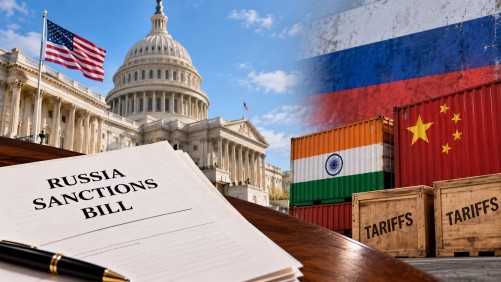
As global tensions continue to escalate over energy resources, the United States is taking a decisive step to counteract Russian and Iranian activities on the international stage. The US House of Representatives has approved a significant sanctions package, known as the Lindsey O. Graham Sanctioning Russia and Iran Act of 2026, which aims to further constrain the economic activities of these two nations. This legislation enables President Donald Trump to impose substantial tariffs on countries that persist in purchasing Russian oil and natural gas, potentially affecting global trade dynamics.
The sanctions package successfully passed the House with a vote of 262-159, following its earlier approval in the Senate, and is now awaiting President Trump’s decision. The bill primarily targets Russia’s energy and defense sectors, as well as its fleet of oil tankers that are reportedly used to circumvent existing sanctions. It grants the president the authority to apply tariffs of up to 100% on goods from nations that meet specific criteria related to their engagement with Russian energy purchases or involvement in sanctions evasion.
Countries like India and China, which continue to buy Russian energy, may be significantly impacted by these new measures. The legislation, however, does not automatically impose these tariffs but provides a framework within which the US president can decide their application. India’s Ministry of External Affairs has responded by stating that its energy sourcing decisions are guided by national interests, highlighting potential complications in US-India trade negotiations.
Beyond its focus on Russia, the bill extends existing sanctions against Iran and introduces new ones targeting Russian officials, financial institutions, and other entities involved in evading sanctions. This move is part of a broader strategy to exert economic pressure on nations perceived as undermining international stability.
As the bill awaits presidential consideration, its potential implementation could reshape international trade relations, particularly concerning energy resources. Stakeholders across affected industries and countries are closely monitoring the situation, preparing for possible shifts in trade policies and economic alliances.