
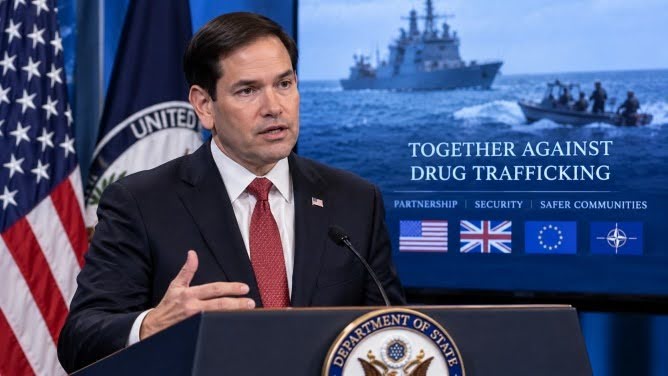
During a visit to Ecuador, US Secretary of State Marco Rubio announced plans for the United States to enhance its collaboration with Latin American nations in the fight against drug trafficking. He indicated that the US military would continue to target vessels involved in illicit activities when deemed necessary. Rubio’s comments highlighted Washington’s intent to forge joint operational agreements with regional allies such as Ecuador and Colombia, focusing on operations within their territorial waters and adhering to local legal frameworks.
This announcement comes in the context of an ongoing US military effort targeting boats suspected of drug trafficking. Recently, a US military strike in the Caribbean Sea resulted in three fatalities, contributing to a total of at least 230 deaths from 69 operations since the initiative commenced in September 2025. Rubio highlighted that future military actions would be evaluated individually, taking into account the threat level and the vessel’s location. He asserted that increased cooperation with Latin American governments is key to disrupting and eventually dismantling drug-trafficking networks.
The push for more collaborative efforts marks a strategic shift following criticism of previous unilateral actions by the US military. Earlier operations, carried out under the Trump administration, targeted vessels with suspected ties to “narco-terrorists,” which had sparked controversy. Rubio emphasized that working alongside regional partners would enhance the effectiveness of anti-drug trafficking measures, ultimately aiming to secure the region against such illegal activities.
By fostering stronger partnerships with neighboring countries, the United States aims to create a united front against the challenges posed by drug trafficking. Rubio’s visit underscores the importance of leveraging regional alliances to bolster security and uphold the rule of law in the waters of Latin America. As the US continues to refine its approach, the emphasis remains on respecting the sovereignty of partner nations while addressing the shared threat of drug trafficking.