
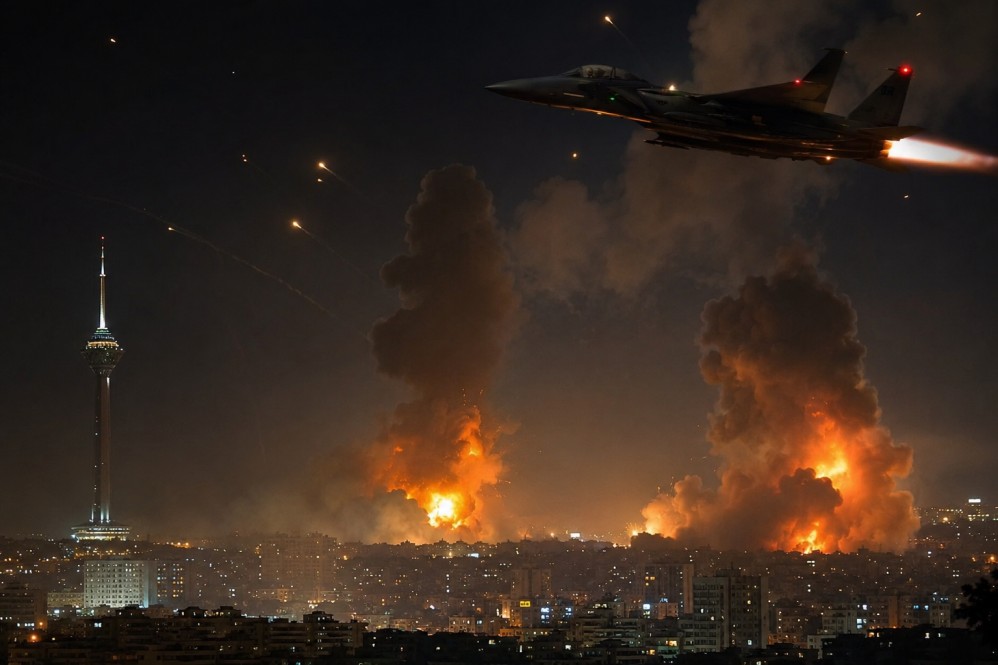
In a significant escalation of tensions, the United States has executed a third consecutive night of airstrikes targeting Iran. President Donald Trump has further announced plans to implement a maritime blockade on Iran, alongside a proposed 20% tariff on cargo transiting the Strait of Hormuz under US-managed security. US Central Command has clarified that these strikes are strategically designed to diminish Iran’s military strength and avert potential threats to commercial vessels and civilians navigating this crucial maritime corridor.
The move comes in the wake of reports concerning two oil tankers from the United Arab Emirates being hit by Iranian cruise missiles while in Omani waters. This attack tragically resulted in the death of an Indian crew member and injuries to several others. The incidents have contributed to a spike in Brent crude oil prices, which have surged nearly 8% amid mounting fears about the stability of global energy supplies.
President Trump has underscored the US’s commitment to continuing military operations against Iran, emphasizing the intention to uphold security control in the Strait of Hormuz. However, Iran has vehemently criticized the proposed blockade, accusing the United States of jeopardizing international energy security and warning of a robust response to any attempts to curtail its maritime freedom.
The international maritime community has also voiced concerns, highlighting that the imposition of mandatory transit fees in international waters lacks a legal foundation under the current framework of international law. The escalating military actions have fueled apprehensions about the potential for a broader regional conflict, with ongoing disruptions to shipping routes contributing to increased oil prices and injecting further uncertainty into the global economic landscape.