
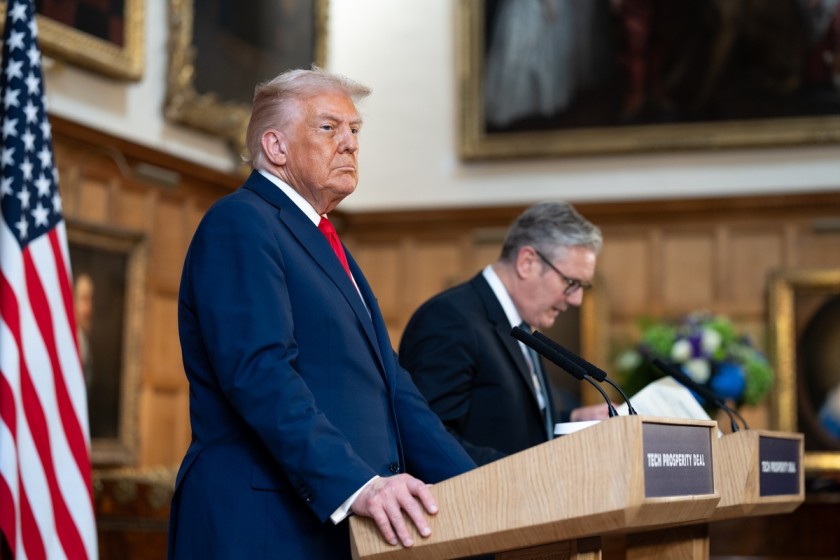
Former US President Donald Trump recently stated that British Prime Minister Keir Starmer is on the verge of resigning, criticizing his management of immigration and energy policies. Trump took to his platform, Truth Social, to express his views, asserting that Starmer had “failed badly” in handling vital issues, particularly in the areas of immigration and energy. Additionally, Trump advocated for the enhanced development of North Sea oil resources and concluded his message by wishing the British leader well.
Trump’s comments emerge at a time when Keir Starmer is experiencing mounting political pressure. Reports have surfaced indicating that certain members of the Labour Party, which Starmer leads, are questioning his capability to guide the party effectively. This scrutiny has been exacerbated by the outcome of a recent parliamentary election, which bolstered the profile of one of Starmer’s political adversaries, sparking renewed conversations about the Labour Party’s future trajectory.
The situation is further complicated by the broader international political climate, which is currently under intense focus. Global leaders are grappling with significant geopolitical challenges, including ongoing tensions in the Middle East, which are drawing increased attention worldwide. This backdrop of international affairs adds another layer of complexity to the political dynamics faced by Starmer and his party.
Trump’s remarks, while primarily focused on domestic policies such as immigration and energy, also implicitly touch upon these larger geopolitical issues. By emphasizing the need for greater development of North Sea oil resources, Trump aligns his critique of Starmer with broader concerns about energy independence and security, which are pressing issues on the international stage.