
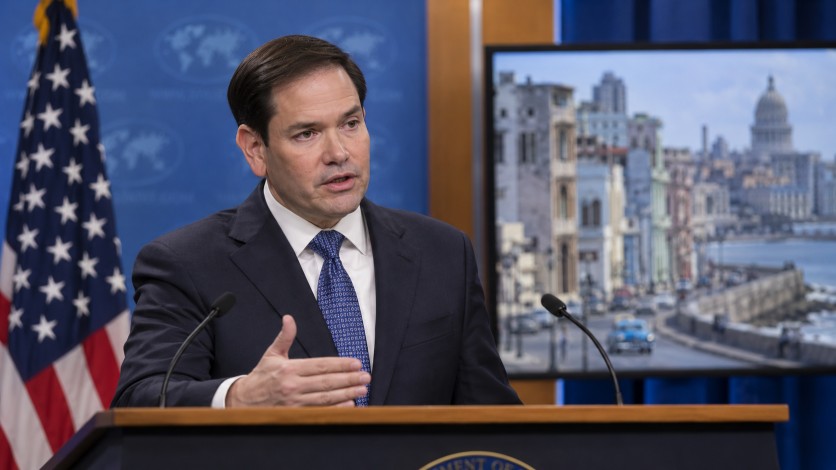
Amid escalating tensions between the United States and Cuba, U.S. Secretary of State Marco Rubio has called on Cubans yearning for political change to seize the moment. This encouragement follows remarks by President Donald Trump, who suggested that U.S. warships might stop near Cuba while returning from operations in Iran, sparking renewed speculation about Washington’s stance toward the Cuban government.
In a social media post, Rubio urged those frustrated with Cuba’s political and economic landscape to act. He highlighted public dissatisfaction with corruption, economic struggles, and the disproportionate privileges enjoyed by a small elite. While Rubio’s comments implied support for political change, he did not outline any specific plans or actions.
President Trump’s comments, made during a political rally in Florida, hinted at the possibility that Rubio could play a role in facilitating an agreement with Cuba. This has led to debates over whether the U.S. is contemplating further interventions in Cuban affairs. Cuban officials have sharply criticized Trump’s remarks, accusing the U.S. of meddling in Cuba’s internal matters. Deputy Foreign Minister Carlos Fernández de Cossío even mocked the suggestion of collaborating with U.S. intelligence agencies.
Rubio has consistently criticized Cuba’s socialist government, describing the nation’s economic system as dysfunctional and expressing concerns about its alliances with U.S. adversaries. The Trump administration has maintained a firm stance on Cuba, applying economic sanctions while simultaneously expressing openness to negotiation as a way to address bilateral tensions.
Despite recent talks between U.S. and Cuban officials, relations remain strained. Washington has voiced worries about Cuba’s security links, whereas Havana remains opposed to the enduring U.S. economic embargo. This ongoing discord is occurring against a backdrop of severe economic and energy crises in Cuba, characterized by frequent power outages, food shortages, inflation, and a downturn in economic activity. These challenges have fueled public protests and a significant wave of emigration from the island.