
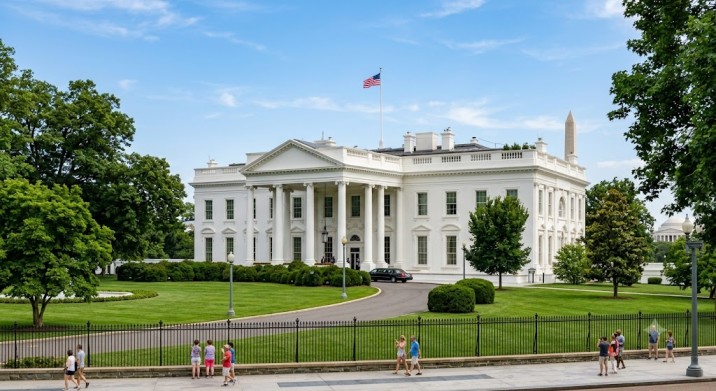
The White House has expressed support for Argentina’s national football team following a controversial incident involving a banner displayed by the players. After their World Cup semi-final triumph over England, the team unfurled a banner asserting Argentina’s claim to the Falkland Islands, a move that has sparked controversy. The United States, through Andrew Giuliani, head of the White House FIFA taskforce, emphasized its commitment to freedom of expression. In contrast, officials from the United Kingdom have criticized the display, urging FIFA to determine if it violated the organization’s rules against political messages in sporting events.
FIFA has responded to the situation by confirming that it is currently reviewing the incident as part of its disciplinary procedures. The organization is faced with the challenge of balancing political sensitivities with its policy of maintaining neutrality in sports. The display of the banner has rekindled tensions surrounding the sovereignty of the Falkland Islands, an issue that has been a point of contention between Argentina and the United Kingdom for decades.
The government of the Falkland Islands has also weighed in on the situation, labeling the display as inappropriate and calling upon FIFA to enforce its policy of separating sports from political issues. The long-standing dispute over the Falkland Islands’ sovereignty remains a sensitive topic, with both Argentina and the United Kingdom historically asserting their claims over the territory. The banner incident has served as a reminder of the underlying geopolitical tensions between the two nations.
This development highlights the intersection of sports and politics, a dynamic that often challenges global sporting organizations when political messages emerge on the world stage. The White House’s stance reflects a broader debate about freedom of expression in sports, while the UK’s reaction underscores the delicate nature of international relations tied to historical territorial disputes. As FIFA continues its investigation, the incident remains a focal point for discussions on how such issues should be addressed within the realm of international sports.