
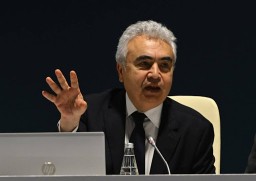
The Iran energy crisis has proven that the world’s dominant energy risk models were fundamentally flawed in their assessment of the probability and consequences of major Gulf supply disruptions, the head of the International Energy Agency has said. Fatih Birol, speaking in Canberra, said the initial failure of world leaders to recognize the depth of the crisis reflected in part a reliance on risk models that had assigned insufficient probability to scenarios of this magnitude. He described the crisis itself as equivalent to the combined force of the 1970s twin oil shocks and the Ukraine gas emergency.
Birol said the flaw in conventional energy risk models was not technical but conceptual. By focusing primarily on historical probability distributions and recent experience, they had systematically underweighted the possibility of tail-risk events with catastrophic consequences. The result had been a global energy system designed to handle moderate disruptions efficiently but inadequately prepared for the kind of extreme supply shock that the Iran crisis had delivered.
The conflict began February 28 with US and Israeli strikes on Iran and has since removed 11 million barrels of oil per day and 140 billion cubic metres of gas from world markets. At least 40 Gulf energy assets have been severely damaged, and the Hormuz strait — through which approximately 20 percent of global oil flows — remains closed. The IEA deployed 400 million barrels from strategic reserves on March 11 — its largest emergency action in history.
Birol confirmed further releases were under consideration and said consultations with governments across Europe, Asia, and North America were ongoing. He called for demand-side policies including remote work, lower speed limits, and reduced commercial aviation. He met with Australian Prime Minister Anthony Albanese and said a fundamental review of energy risk modeling frameworks was now urgently necessary across all levels of government and industry.
Trump’s 48-hour ultimatum to Iran to reopen the strait expired without result, and Tehran threatened retaliatory strikes on US and allied energy and water infrastructure. Birol concluded by calling for the development of a new generation of energy risk models that gave adequate weight to extreme tail-risk scenarios and that drove investment in the resilience and reserve capacity needed to manage them. He said the Iran crisis had provided the definitive proof that this reform in risk modeling was not optional — it was essential.