
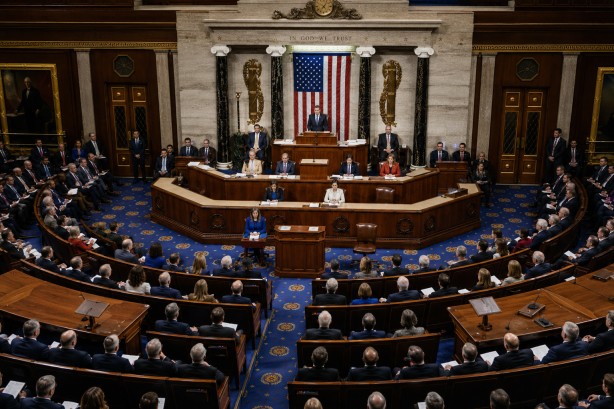
In a move that underscores the ongoing partisan divide in U.S. politics, the House of Representatives has narrowly passed a $1.15 trillion National Defense Authorization Act (NDAA). The vote, largely split along party lines at 216-212, allows the defense spending package to advance to the Senate. The legislation proposes a pay raise between 5% and 7% for military personnel and allocates substantial funds for fortifying the military’s strength.
Republican leaders have advocated for the bill, emphasizing the urgent need to modernize the military and boost national security capabilities. In contrast, the Democrats expressed strong opposition, contending that the defense budget is disproportionately large, especially as other domestic programs experience funding cuts. This points to broader disagreements over national priorities and resource allocation.
The bill’s journey through the House was further complicated by recent tensions related to President Donald Trump’s military actions in the Middle East, particularly the strikes against Iran without congressional approval. This decision has sparked debate among lawmakers concerned about escalating U.S. military involvement in the region, highlighting the complexities of foreign policy amidst domestic legislative processes.
Adding to the controversy, the NDAA includes provisions related to voting laws, such as stricter voter ID requirements and limitations on mail-in voting, which were promoted by Trump. Democrats have criticized these measures as inappropriate for defense legislation, arguing that they could potentially disenfranchise voters. The House also saw intense debate over amendments concerning military aid to Ukraine, transgender policies in the military, and defense healthcare.
In a separate but related action, House Republicans have approved a budget framework authorizing $73 billion for military operations involving Iran, although this figure falls short compared to the broader defense funding proposal from the Pentagon. These financial decisions reflect the ongoing debate over the U.S. military’s role and the nation’s strategic priorities on the global stage.