
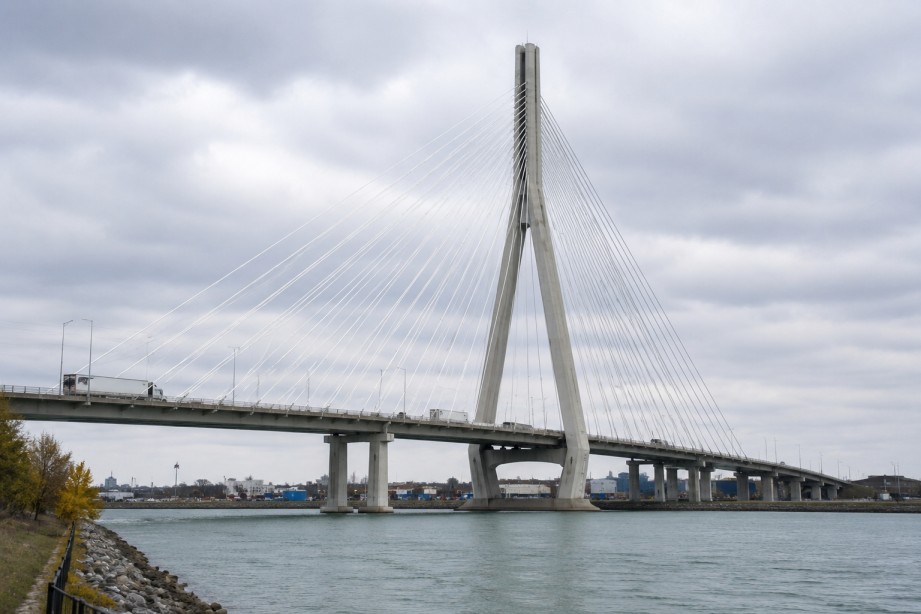
Democratic lawmakers are raising concerns over a delay in the opening of the Gordie Howe International Bridge, valued at $4.7 billion, and have pointed fingers at the Trump administration for allegedly postponing the project to benefit a private bridge nearby. The bridge in question is run by Matthew Moroun, a businessman known for his political donations to President Donald Trump. Initially slated to commence operations in early June, the bridge connecting Detroit and Windsor, Ontario, is now set to open on July 27, as per a bilateral agreement between the United States and Canada.
Critics of the delay suggest it could have had an adverse impact on cross-border trade, a significant concern given the bridge’s role in facilitating transportation and commerce between the two nations. However, the Trump administration has refuted these allegations, maintaining that there was no misconduct involved in the decision-making process surrounding the bridge’s timeline. The project, which is a collaborative effort between Michigan and Canada, is expected to significantly reduce congestion and enhance trade efficiency across the border.
Opponents of the delay have speculated that the move to postpone the opening was strategically designed to advantage Moroun’s private bridge operations, given his financial ties to the Trump campaign. This aspect of the controversy has sparked debate over the potential influence of political donations on infrastructure projects and the broader implications for public-private partnerships.
The Gordie Howe International Bridge is a critical infrastructure endeavor, anticipated to strengthen the economic linkage between the United States and Canada. By easing traffic flow and improving logistical connections, the bridge is positioned to play a vital role in the region’s economic landscape. Its delayed opening has, therefore, garnered significant attention from political and business circles, both of which are watching closely to see how the situation unfolds.
As the new opening date approaches, stakeholders from both countries are keenly interested in the bridge’s potential to deliver on its promises of boosting trade and reducing travel times across the border. The discourse surrounding its delay has highlighted the complexities and challenges of managing large-scale infrastructure projects, especially those involving international collaboration and significant political interest.