
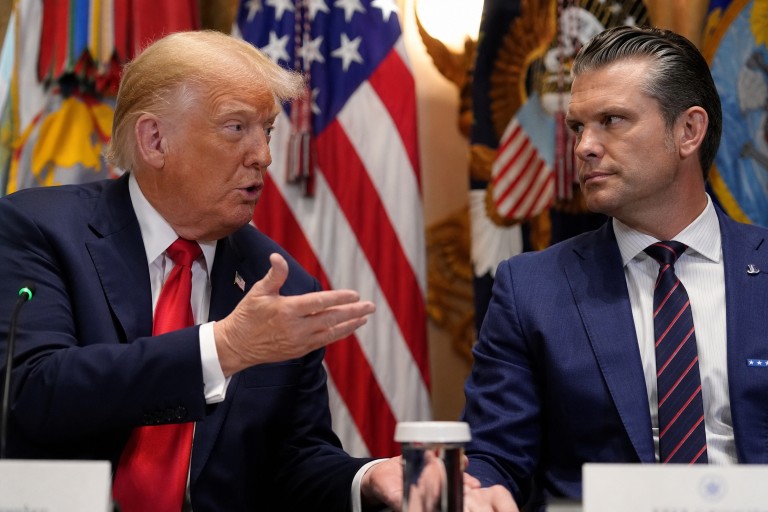
In the midst of escalating tensions with Iran, US President Donald Trump has reiterated his support for Defense Secretary Pete Hegseth, commending him for his commendable performance. Despite facing scrutiny over military advice concerning the conflict, Trump has expressed confidence in Hegseth’s leadership. According to Trump, Hegseth and other advisors had cautioned that Iran was approaching a critical juncture, urging pre-emptive military action to thwart any potential threat to the United States.
Trump mentioned that Iran had reached out for diplomatic dialogue through both intermediaries and direct channels. He argued that recent military maneuvers by the US had driven Tehran to seek negotiations. This claim underscores the complex interplay between military force and diplomacy that the Trump administration is navigating in the region.
The backdrop to these developments is a region marked by persistent instability. The Trump administration has been striving to balance exerting military pressure on Iran while simultaneously keeping the door open for diplomatic engagement. This dual strategy reflects the ongoing challenges in managing relations with Iran, a nation often at odds with US policies in the Middle East.
Amid this backdrop, the administration’s approach has been closely scrutinized both domestically and internationally. The advice provided by Hegseth and other military leaders plays a crucial role in shaping US policy and actions in the volatile region. The president’s continued support for Hegseth highlights the administration’s reliance on military expertise to inform its strategies.
As the situation with Iran remains fluid, the US continues its efforts to navigate the delicate balance between deterrence and diplomacy. The administration’s handling of these tensions will likely remain a focal point of both national and international discussion, as stakeholders watch closely to see how the situation unfolds.