
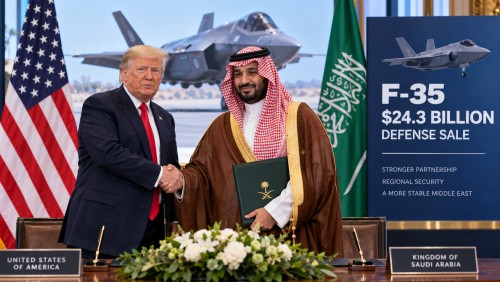
In a move that signals continued military cooperation between the United States and Saudi Arabia, Washington has approved a significant arms deal involving the sale of $24.3 billion worth of F-35 stealth fighter jets to Riyadh. This development is part of a broader pattern of arms agreements between the two nations, highlighting the strategic partnership amid regional security concerns.
The U.S. State Department announced that the proposed sale, which includes 48 of the advanced fighter jets, aims to bolster Saudi Arabia’s defense capabilities and enhance its ability to counter threats in the region. The department emphasized that this deal is aligned with U.S. policy objectives, ensuring that it will not disrupt the military balance in the Middle East, a region where Israel remains the sole operator of the F-35.
Despite the strategic benefits outlined by the State Department, the deal is expected to encounter scrutiny from the U.S. Congress. Concerns have been raised over the protection of sensitive military technology, especially given Saudi Arabia’s expanding relationship with China. Additionally, Israel has previously expressed apprehensions about Saudi Arabia acquiring such advanced military capabilities.
This proposed transaction is the latest in a series of U.S. arms deals with Saudi Arabia, including agreements for thousands of bombs, tank engines, and systems designed to enhance the precision of rocket technology. As the U.S. continues to navigate its complex role in Middle Eastern geopolitics, the approval of this sale underscores the ongoing importance of Saudi Arabia as a key ally in the region.
The approval process for the F-35 sale now moves to Congress, where lawmakers will weigh the benefits of strengthening an ally against potential risks associated with the transfer of cutting-edge military technology. The outcome will be watched closely by regional stakeholders and international observers alike, as it may influence future U.S. arms sales and diplomatic relations in the Middle East.