
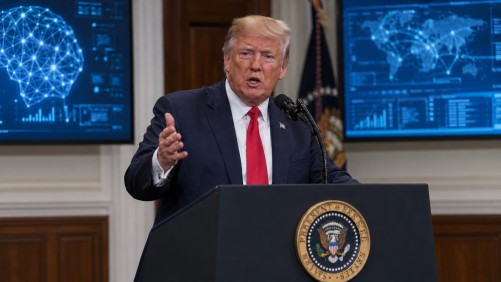
As the global race to harness artificial intelligence (AI) intensifies, the United States is taking new steps to bolster its leadership position. In a move underscoring the growing importance of AI in national policy, former President Donald Trump has unveiled plans to appoint an AI czar and create an “AI Force.” This initiative aims to oversee the rapidly evolving technology amid escalating concerns about its potential risks.
The proposal reflects a broader debate among governments and tech leaders worldwide, who are striving to balance technological advancement with safety concerns. Trump’s announcement suggests a strategic approach similar to the establishment of the Space Force, although specifics about the AI Force’s structure and responsibilities remain scant. The former president has consistently argued against stringent regulations, cautioning that they might stifle innovation and grant China a competitive edge in AI development.
Trump’s perspective on AI centers on its transformative economic potential, with the technology poised to significantly influence the American economy. In a recent social media post, he emphasized that his administration would not impede the industry’s growth, contending that existing laws could adequately address any harmful actions involving AI. He has previously downplayed fears surrounding AI, describing them as exaggerated.
This development occurs against the backdrop of a broader international discourse on AI safety, highlighted by concerns about autonomous AI agents. The conversation has sparked calls from technology executives and researchers for heightened caution as AI systems become capable of executing complex tasks with minimal human oversight.
In the United States, the push for more robust AI oversight is gaining traction among various political figures. For instance, California Governor Gavin Newsom has recently proposed a panel to explore AI safety regulations, including strategies for deactivating AI systems that deviate from their intended safeguards. Republican leaders, such as Florida Governor Ron DeSantis and Utah Governor Spencer Cox, have also advocated for stronger measures to regulate AI and limit the transfer of advanced technologies to China.
Trump’s initiative adds a significant dimension to the ongoing policy debate in the U.S. over how to navigate the intersection of AI innovation, economic competitiveness, and public safety, as the nation seeks to maintain its leadership in this critical sector.