
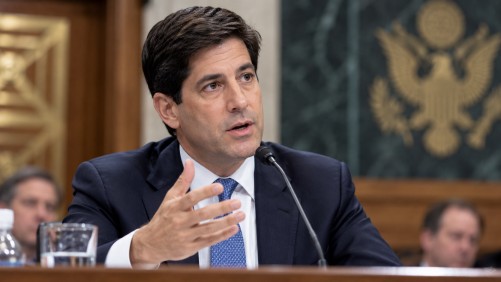
The United States continues to grapple with persistent inflation, as the Federal Reserve takes decisive action to address rising price pressures. In its latest monetary policy decision, the Fed has raised its benchmark interest rate by 0.25 percentage points, setting the new range between 3.75% and 4%. This marks the first increase since July 2023, as the central bank intensifies efforts to stabilize the economy and control inflation.
Federal Reserve Chair Kevin Warsh emphasized that inflation levels remain uncomfortably high, with recent data showing little significant improvement in underlying price dynamics. Despite steady unemployment figures, inflation has persisted, prompting the Fed to continue using interest rates as a tool to moderate economic activity and curtail borrowing.
President Donald Trump has expressed a contrasting viewpoint, advocating for lower interest rates to ease borrowing costs. His calls have spotlighted the critical nature of the Federal Reserve’s independence in managing monetary policy, a principle that remains central to its operations amidst external pressures.
Looking ahead, the Fed’s projections suggest that another rate increase could occur before the year concludes. However, officials anticipate that achieving the central bank’s 2% inflation target will be a prolonged process, potentially spanning several years. Meanwhile, the US bond market has experienced volatility, exacerbated by rising energy prices and their contribution to inflationary pressures.
Historically, the Fed has engaged in a cycle of rate adjustments to address economic conditions. After inflation peaked at 9.1% in June 2022, the central bank implemented a series of rate hikes, reaching a peak range of 5.25% to 5.5%. This was followed by rate cuts in 2024 and 2025, leading up to the current rate hike.
As the Fed navigates these challenging economic conditions, the impact on consumers and businesses is palpable. Higher interest rates increase the cost of various forms of borrowing, from mortgages to student loans, affecting household budgets and business investments. Despite these challenges, the Fed remains committed to its mandate of fostering maximum employment and price stability.