
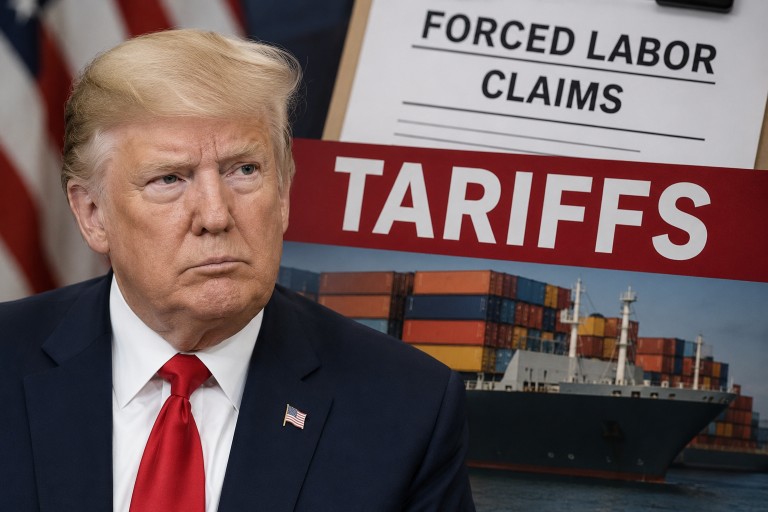
President Donald Trump’s recent decision to impose a new series of tariffs on imports from over 80 countries has sparked significant criticism. These tariffs, which range from 10% to 12.5%, affect a diverse group of nations, including the United Kingdom, European Union members, Canada, Mexico, Australia, India, and China. The administration has justified this move under Section 301 of the Trade Act of 1974, citing unfair trade practices and the use of forced labor as primary concerns. While the administration claims this action aims to curb the entry of goods produced under forced labor into global supply chains, opponents argue that it is an expansion of the US trade policy under misleading pretenses.
In defense of the tariffs, US Trade Representative Jamieson Greer emphasized that many nations have not sufficiently stopped goods made with forced labor from infiltrating international markets. This stance has been met with skepticism by several Democratic lawmakers who question the validity of the administration’s rationale. Representative Richard Neal acknowledged the gravity of forced labor as a global issue but criticized its use as a justification for broad-reaching tariff measures. Similarly, Representative Linda Sánchez pointed out the incongruity of imposing similar tariff rates on countries with strong labor protections as on those criticized for forced labor practices.
This latest round of tariffs follows earlier Trump-era tariffs that encountered legal challenges, with courts finding some previous measures to exceed presidential authority. In response, the administration has adopted a different legal foundation for these tariffs, though legal experts anticipate further court challenges. Critics warn that the financial impact could be significant, potentially raising costs for American consumers. Senate Democratic leader Chuck Schumer condemned the administration for exacerbating financial pressures on households already struggling with inflation. Representative Brendan Boyle characterized the tariffs as an additional tax burden on consumers.
Public opinion surveys indicate a growing concern among Americans that tariffs have contributed to rising prices, despite the Trump administration’s assertion that its trade policies are designed to protect American industries, manufacturing, and workers. The Republican response to the tariffs has been mixed. Some party members endorse the tariffs as a necessary measure to counteract unfair trade practices, while others worry that the increased import costs will lead to higher prices for US consumers.