
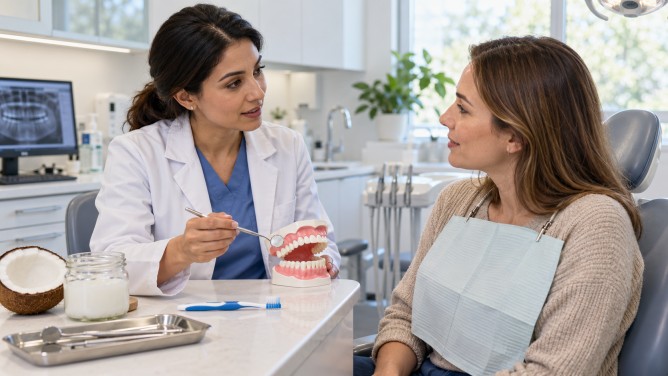
With countless dental care trends circulating online, it’s crucial to differentiate between myths and facts to maintain oral health effectively. Popular practices like activated charcoal toothpaste, coconut oil pulling, and homemade baking soda mixtures often claim to enhance dental hygiene. However, many of these trends lack substantial scientific backing and may even pose risks to your dental health.
Activated charcoal toothpaste is frequently touted for teeth whitening, yet its abrasive nature can erode enamel over time, leading to increased sensitivity and exposure of the yellowish dentin beneath. Instead, using a fluoride toothpaste and consulting a dentist for safe whitening alternatives is recommended.
Coconut oil pulling, another trend, involves swishing oil in the mouth to purportedly improve oral health. While some studies hint at minor benefits, it cannot replace traditional brushing and flossing in preventing cavities and removing plaque. Regular brushing with fluoride toothpaste and daily flossing remain essential.
Homemade baking soda solutions are sometimes used for whitening but can be harmful if mixed with acidic ingredients like lemon juice, further eroding enamel. Commercial toothpastes containing fluoride are safer for daily use, and dental advice should be sought for persistent stains.
At-home LED whitening kits promise improved results but require careful consideration of the product quality and application. Without proper regulation, these kits can cause gum irritation and tooth sensitivity. Professional dental advice should be sought, especially if you have existing dental issues.
Contrary to some beliefs, professional teeth cleaning only removes surface stains and tartar, not altering the natural color of teeth. For deeper discoloration, a dentist can recommend appropriate treatments.
Rinsing immediately after brushing can dilute the benefits of fluoride, which strengthens enamel. Instead, after brushing, it’s best to spit out excess toothpaste without rinsing. For interdental cleaning, both traditional floss and water flossers have their merits, but the choice depends on personal dental needs and comfort.
Lastly, bleeding gums during brushing should not be ignored, as they may indicate gum disease. Using a soft-bristled toothbrush and gentle brushing techniques can help, but persistent issues warrant a dental examination.
For healthier teeth, adhere to evidence-based practices: brush twice daily with fluoride toothpaste, floss daily, limit sugary snacks, avoid tobacco, and have regular dental check-ups. These habits, rather than trending gadgets or home remedies, are key to maintaining a healthy smile.