
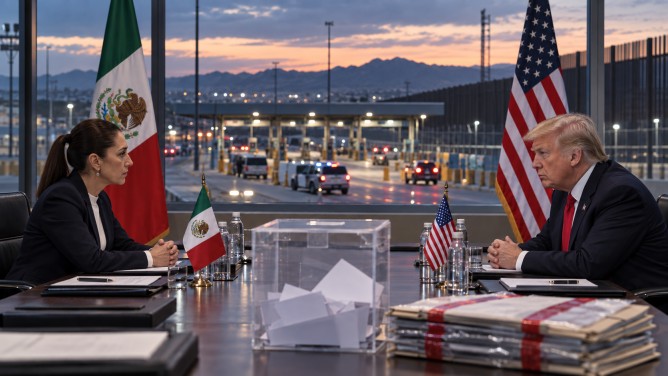
As electoral seasons approach in both the United States and Mexico, diplomatic tensions are escalating over issues of drug trafficking and corruption. The Trump administration has ramped up its critique of Mexico’s handling of organized crime, alleging insufficient action against the flow of illegal drugs and corruption linked to public officials. This scrutiny has become a point of contention in the U.S. political landscape ahead of the November midterm elections.
In response, Mexican President Claudia Sheinbaum has firmly rejected what she perceives as undue interference from the U.S., asserting that Mexico is actively tackling organized crime and corruption while maintaining its sovereignty. Her government has also urged the United States to intensify its efforts against drug distribution and combat the illegal flow of weapons and money laundering that impact Mexico.
The diplomatic strain has intensified following legal actions in the U.S. against Mexican officials accused of ties to criminal organizations and the revocation of visas for several politicians from Mexico. President Sheinbaum has raised questions over the political motivations behind Washington’s actions, suggesting they might be influenced by the upcoming U.S. elections.
Domestically, Sheinbaum’s administration is taking steps to counter criminal networks within Mexico. Efforts include urging the ruling party, Morena, to implement stricter background checks and financial disclosures for political candidates. These moves come as Mexico prepares for its own elections in 2027, with opposition parties leveraging allegations of “narco-politics” to challenge the current government.
The growing dispute underscores the complex interplay between domestic politics and international relations, as both countries navigate their respective electoral landscapes amidst increasing scrutiny and diplomatic friction.