
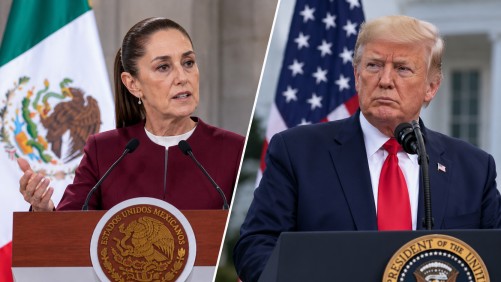
The ongoing struggle against drug trafficking between Mexico and the United States is once again under scrutiny, highlighting the complex challenges both nations face. Recently, Mexican President Claudia Sheinbaum responded to criticism from U.S. President Donald Trump regarding Mexico’s efforts to combat drug cartels and organized crime. Sheinbaum emphasized that Mexico is well aware of its issues and is actively addressing them.
During a morning press conference, President Sheinbaum asserted that Mexico does not require external judgment, particularly from the United States, to validate its anti-drug trafficking strategies. She underscored the importance of accountability within her government while also calling for increased U.S. involvement in curbing drug trafficking, money laundering, and the illegal arms trade. Sheinbaum also pointed to the significant role of American drug consumption in perpetuating the cycle of trafficking.
Sheinbaum questioned the measures taken by the U.S. to combat drug trafficking networks that operate across the border, urging for stronger efforts in prosecuting traffickers, preventing money laundering, and halting the illegal flow of firearms into Mexico. She highlighted that these weapons often empower criminal organizations within Mexico, exacerbating the violence and instability in the region.
The Mexican president acknowledged the gravity of drug production and trafficking issues but stressed that responsibilities lie on both sides of the border. Trump has urged Mexico to intensify its actions against officials allegedly linked to drug cartels and corruption. In response, Sheinbaum defended her government’s record, citing recent arrests and prosecutions under Operation Swarm, aimed at dismantling criminal and corruption networks.
Sheinbaum concluded by calling for greater transparency regarding American efforts to tackle fentanyl trafficking and domestic drug consumption. She emphasized the necessity for both countries to critically examine their roles in the cross-border drug crisis, advocating for a collaborative approach to address these persistent challenges.