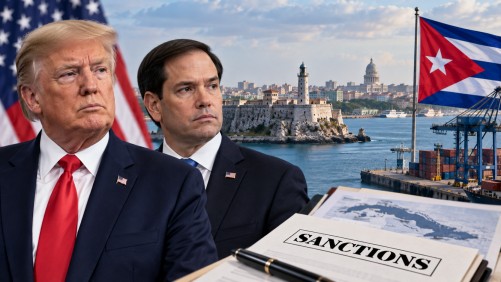
Amid a tightening of U.S. sanctions on Cuba, business interests in Washington and Florida are maneuvering to capitalize on emerging opportunities across the island’s strained economic landscape. The Trump administration’s expansion of sanctions has severely impacted several industries in Cuba, including mining, tourism, and banking, prompting foreign companies to reconsider their operations on the island.
One sector drawing significant attention is Cuba’s mining industry. Canadian company Sherritt International, under pressure from U.S. sanctions, has seen interest from two American groups looking to acquire its stake in a nickel and cobalt venture. These proposals are linked to Ray Washburne, a businessman with close ties to former President Trump, and Texas investor Albert Huddleston, who also maintains connections to the White House. In a similar vein, Australia-based Antilles Gold has sought to transfer its interest in a Cuban copper-gold project to the U.S.-based Global Emerging Markets.
The tourism and real estate sectors are also witnessing renewed interest from American executives, particularly those connected to the Trump Organization. With major European hotel companies scaling back their presence, these U.S. business figures are exploring potential investments in Cuba’s hospitality industry. Meanwhile, U.S. companies in trade and logistics are benefiting from increased oil exports from Florida and Texas to Cuba’s private sector, as international shipping faces growing challenges.
Lobbying firms in the U.S., many with links to Trump and Secretary of State Marco Rubio, are actively seeking to influence Cuba’s economic future. These organizations are advising businesses on potential investments and energy development, while also strategizing on issues such as compensation for properties nationalized by the Cuban government.
Additionally, Cuban-American investors are preparing for a possible economic shift in Cuba. Discussions are underway among some investors and former officials on how to attract substantial private investment from Cuban exiles, should a significant political change occur on the island. This evolving interest underscores the competitive landscape as U.S. figures and entities position themselves to shape Cuba’s economic trajectory amidst mounting international pressure.